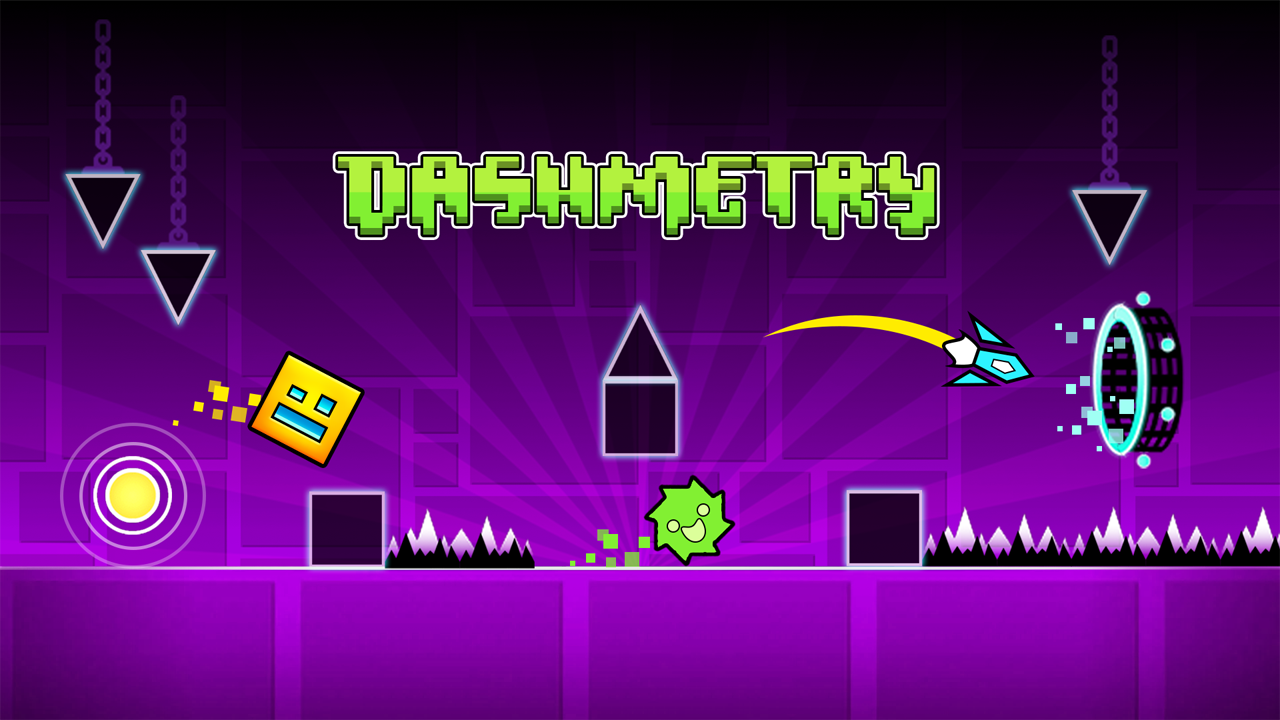


Geometry Dash does not allow passive play. From the opening second of a level, attention must remain sharp and uninterrupted. There is no safe moment to relax, and no system to compensate for distraction. This design transforms focus into a measurable skill that directly affects performance.
Timing as a Cognitive Exercise
Precise timing in Geometry Dash is not only physical but mental. Players learn to predict spacing, speed changes, and transitions before they appear. Over time, execution shifts from reactive input to anticipatory movement, reflecting deeper cognitive engagement with the level structure.
Why Consistency Matters More Than Speed
Fast reactions alone rarely lead to success. Geometry Dash rewards steady rhythm and controlled pacing instead of rushed execution. Players who prioritize consistency develop smoother runs and reduce errors caused by impatience or overcorrection.
Failure as Structured Feedback
Every mistake delivers immediate and unambiguous feedback. Because obstacles behave consistently, failure highlights specific weaknesses rather than general difficulty. This clarity encourages adjustment and refinement instead of frustration.
Mental Pressure Near Completion
As progress increases, emotional tension becomes the primary challenge. Geometry Dash exposes how anxiety disrupts rhythm and timing, reinforcing the importance of calm decision-making under pressure.
Growth Within Fixed Rules
The game never changes its core mechanics, yet the experience evolves as skill improves. This stability allows players to measure growth internally, focusing on mastery rather than external rewards.
Why the Experience Remains Relevant
Geometry Dash endures because it respects effort and attention. By combining simplicity with precision, it creates a lasting challenge where improvement feels earned and meaningful.
Visit: https://geometrygames.io