
PureKonect™ Logo
    • Advanced Search
  • Guest
    • Login
    • Register
    • Night mode
leo parker Cover Image
User Image
Drag to reposition cover
leo parker Profile Picture
leo parker

@leoparker22

  • Timeline
  • Groups
  • Likes
  • Following
  • Followers
  • Photos
  • Videos
  • Reels
leo parker profile picture leo parker profile picture
leo parker
6 d - Translate

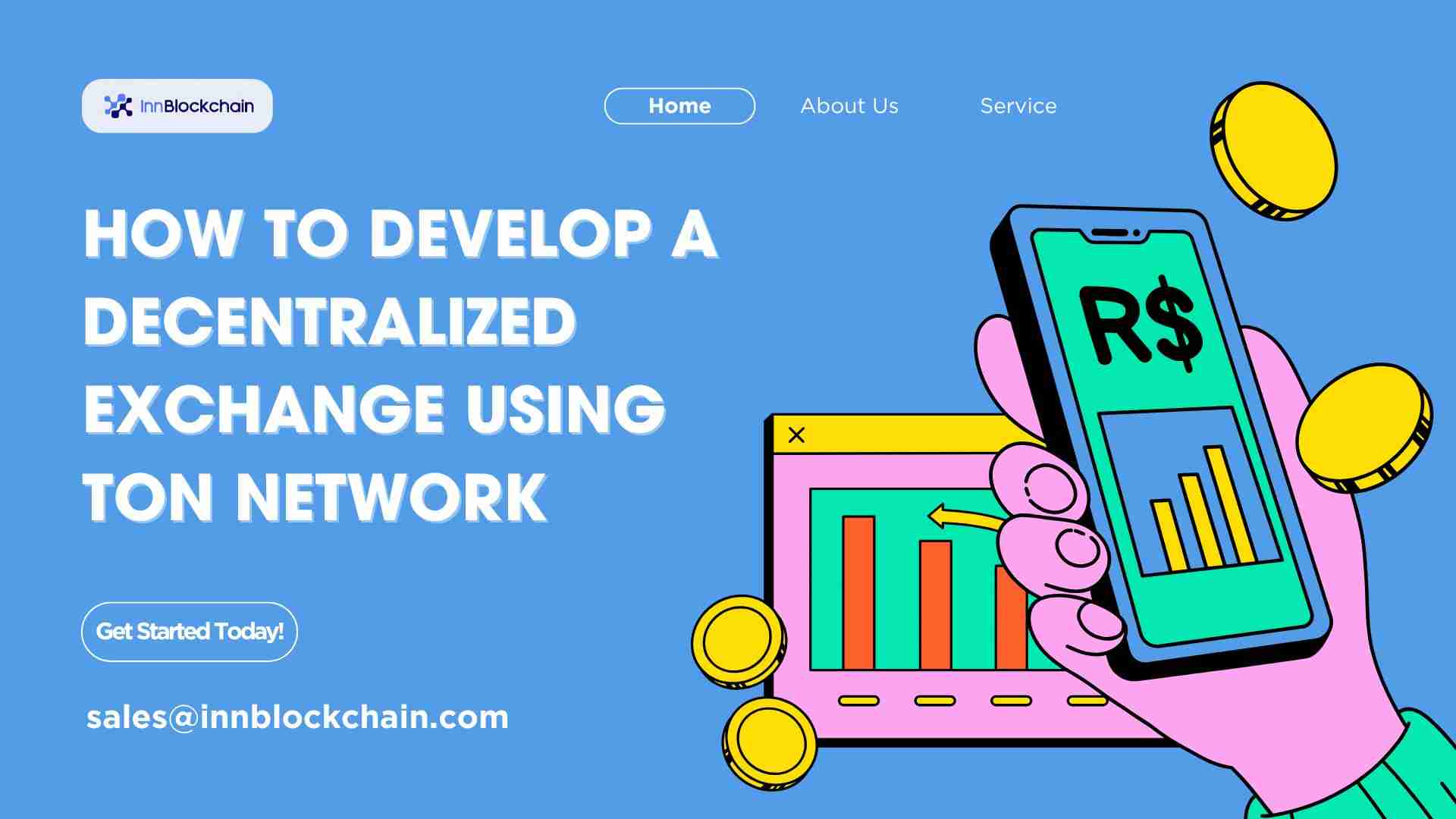
How to Develop a Decentralized Exchange Using TON Network

If you're thinking about starting a decentralized exchange for more than a month, then you've probably checked out blockchain networks like Ethereum, BNB Chain, or Polygon, and more. But, TON (The Open Network) is another platform that's been steadily improving in this highly competitive space.

This network is backed by Telegram and made for fast speeds, low costs, and widespread use. TON is becoming a real option for DeFi creators. If you're planning to create a DEX in 2026, using TON could give you an advantage.

So, here’s the step-by-step guide to dex platform development on the TON blockchain network.
1. Understand Why Choose TON

Remember: Before you build, understand the platform.

TON is a layer-1 blockchain originally developed by Telegram, now maintained by the open-source TON Foundation. It’s optimized for mobile-first use, ultra-fast execution, and low network fees. It has over 900,000 daily active wallets and has seen a sharp rise in DeFi-related developer activity in the past year.

For founders, this means you're not only using a powerful blockchain but also building within a growing group of users who are already using it.

Next…

2. Decide The DEX Type You Want To Build

DEXs can be different.

So, before looking for the DEX development service, decide early on what type of DEX you want to start. Will you create a DEX based on AMM, like Uniswap or PancakeSwap?

Now, some of you might think, “Can TON's design handle advanced trading systems in addition to simpler automated market makers (AMMs)?”

Actually, TON can do both, but AMMs are quicker to set up and work better with the current ways to manage money.

Also, consider whether you want to include:

Liquidity farming
Native staking
NFT integration
On-chain analytics for traders

The model you choose will define your feature set, tech stack, and liquidity plan.
3. Pick the Right Clone or Framework

If you are using a pre-made DEX script to launch fast, check that it works with TON Virtual Machine (TVM) and the smart contract framework that TON supports.

TON is different from Ethereum and doesn't use Solidity. It has its own language, FunC, for smart contracts. Make sure your code works with TON. Ensure that you have hired a Defi development company that can change it to work well.

Don't just aim to replicate Ethereum DEX designs. Understand how TON works to avoid problems later when launching and checking your DEX. Partner with the team that can build a DEX on Ton blockchain.

4. Create and Check Smart Contracts

After your contract logic is ready, you can launch it and make it live. But TON smart contracts work differently from those on EVM chains, so make sure that the DEX development company tests well before deployment.

So, hire a DEX development team that specializes in using tools like:

TON CLI and TON Dev Tools.

Testnet environment for stress testing pools and trades.

Explorer integration to verify live transaction data

If you’re working with external contributors or validators, test interaction flows like liquidity provision, swap execution, and token listing approvals.


5. Focus On Creating a Simple, Mobile-Friendly DEX

Here’s where TON really differs from other chains. Its community is largely Telegram-based and mobile-heavy.

Your DEX website should be simple, work well on phones, and load quickly. It's good if it works with TON wallets like Tonkeeper or Tonhub, which are popular with Telegram users.

So, ask your DEX development company to implement intuitive layouts on your DEX. And, aim to make trading easy and clear for people using phones.

6. Launch and Get People to Use It

After launching, focus on getting more money into your DEX and getting more users.

To get people to use your decentralized exchange, think about connecting with other projects on TON or using Telegram Mini Apps to get new users at the initial stages.

By mid-2026, the total value locked in TON's DeFi world was more than $170 million, and it keeps growing every month. So, stepping into this space now will be the smarter choice.
Final Thoughts
So, building a DEX platform on the TON blockchain will be a good idea, but one thing you need to keep in mind is “hiring a reliable decentralized exchange development company”. Why? Because the TON network and its smart contracts framework are different from existing platforms, only experienced companies that know how to build DEX on Ton Blockchain can offer you a bug-free protocol.

https://www.innblockchain.com/defi-development

#defidevelopment #deficompany #blockchaindevelopment #smartcontracts #dexdevelopment #web3 #cryptodevelopment
image
Like
Comment
Share
leo parker profile picture leo parker profile picture
leo parker
5 w - Translate

DeFi Trends for 2026: What Existing DeFi Startups Should Focus On

If you're running a DeFi startup or looking to establish one in 2026, then this is for you. In this article, let's see the key trends you need to adapt in your DeFi protocol to achieve success in this upcoming year. For new startups, this will help you make smarter decisions, especially when working with a DeFi development company.
Let's dive in.
First, let us look at the size of this field. DeFi still holds a lot of money and attention. And, the Total value locked assets across DeFi is approximately valued $115 to $158. These numbers clearly indicate that user demand and risk both remain real here. (Source: DeFiLlama)
These are the trends to keep an eye on, plus actionable moves you can make today.

1. Layer-2 Solutions and Lower-Cost Networks Are More Important Now
High gas fees on platforms can block your growth. Here, Layer-2 networks fix that by batching transactions off the main chain and settling later. This makes small payments, micro-trading, and fast UX possible.
Why this is valuable for DeFi businesses:
Users will not tolerate slow or costly flows.
Building on or integrating popular Layer-2s gives you scale without changing core smart contracts.

Action steps:
Test your product on at least one major Layer-2.
Measure cost per user action and aim to cut it by 60 to 70 percent.
Offer a friction-free onboarding path from Layer-1 wallets.

Note:

The total value secured across all Ethereum Layer-2 solutions is now approximately $57.82 billion. This represents a significant 53.9% increase over the past year, Source (L2BEAT). This shift is not a minor optimization. It is a foundation for mass use.

2. "Big Investors Are Getting Interested in DeFi Again"
Investors are starting to invest money in DeFi now. These funds help startups to:
Hire More Resources.
Pay For Security Audits.
To Build Unique and Better DeFi Solutions.
If you're an existing DeFi platform founder, investors are now willing to invest in DeFi protocols. So, you can raise funds and scale your product more easily than 2 years ago (Source: The Block).
What does this mean and how it'll exactly help you:
You can plan for a longer runway if you show clear product-market fit.
Investors now value security, compliance, and user experience more than wild growth claims.
A practical idea:
Build straightforward KPI dashboards for potential investors. Show growth, retention, and cost per acquisition.

3. Stablecoins Are Becoming More Popular, and the Rules Are Getting Clearer
Many governments are moving to set rules for stablecoins and payment tokens. A clearer rulebook gives businesses a chance to build trust and reach more mainstream users. So, you can expect new compliance demands as well as new market opportunities.
So, how to prepare for that:
Audit your stablecoin exposure and counters.
Add compliance hooks early. Design systems that can plug in KYC or reserve proofs if regulators ask.
Finding a reputable DeFi development services can help you with this and make it easier.

4. DeFi Projects Can’t Afford to Ignore Security Anymore
Hacks and losses kept hurting the DeFi space consistently. In 2024, $2.2 billion was stolen from crypto platforms, which is 21.07% higher compared to 2023. But still, attackers find fragile code and weak keys in 2025, too. If your product is money-facing, security must be first-line thinking (Source: Chainalysis).
Here's the checklist you need to look at:
Third-party audit from a known firm.
A bug bounty program that pays well.
Clear incident plan and a public playbook for users.
Startups can start with these low-cost moves:
Use standard, battle-tested libraries.
Limit admin keys and deploy multi-sig controls.

5. Real-World Assets Are Coming to the Blockchain
Tokenizing real assets such as invoices, bonds, or property unlocks new liquidity. You can expect more regulated pilots and partnerships with financial institutions in the upcoming days.
Here's what you need to do:
If you work with asset managers, study tokenization pilots now.
Ask your DeFi development company to build modular smart contracts that can support custody rules and off-chain oracles.

6. Upgrading Great UX is Key To Gain More Users
Today, users expect apps that behave like polished web apps. Wallet complexity, confusing flows, and long wait times kill retention.
So, focus on upgrading your platform to perform:
Smooth on-ramp from fiat to crypto.
Clear error messages and guided recovery for lost keys.
Mobile-first flows with short steps.
Design rules that matter:
Reduce the number of clicks before the user performs their first meaningful action.
Show estimated fees and wait times in plain language.
If possible, get a consultation with a DeFi development company to enhance the overall UX on your protocol.

7. Secure Interoperability Between DeFi Protocols Is Becoming Essential
Cross-chain bridges let users move assets between chains. But naive bridges add risk. Expect safer, permissioned, or audited bridge models to become standard.
If you plan cross-chain features:
Use proven bridge protocols or partner with a trusted custodian.
Limit how much value can move in a single hop.
Startups can partner with a DeFi development company to enable interoperability on your platform. For existing platforms, you can also find reliable DeFi development services to upgrade this functionality.

8. DeFi is bringing back privacy tools with caution
Privacy tech can protect users, but it draws regulatory scrutiny. So, privacy-preserving features that protect user data while enabling compliance will be favored. This is 100% applicable for 2026 DeFi users.
So, think about:
Selective privacy for sensitive actions.
On-chain proofs that do not reveal user balances.
This will help your brand to improve users' trust and gain brand visibility quickly.

9. Preventing Unfair Advantages in Blockchain Trades
As activity grows, miners or validators can extract value by reordering trades. Ask your DeFi development company to install dedicated features for reducing this problem, such as fair ordering or auction systems.
Why is this move important? Let's see:
MEV harms retail users and can make your product appear unfair.
Implementing anti-MEV measures helps to protect reputation and keep markets efficient.

1 Composable tooling and the rise of specialist providers
Not every team should rewrite every piece of infrastructure. Specialized providers will offer modular stacks like wallet services, oracle feeds, or identity layers.

This opens two strategies:
Build only the core unique part of your product.
Integrate trusted modules for payments, oracles, and compliance.
If you are not building every piece yourself, a good route is to work with a dapp development services for parts you do not own. A smart DeFi solution provider can help you stitch modules together safely while keeping your IP and business logic in-house.

Simple Technical Checklist to Get Ready for 2026

Deploy on a Layer-2 testnet and measure costs.
Run a third-party audit and maintain a live bug bounty.
Build a simple compliance plan for stablecoins and fiat rails.
Add a multi-sig and key rotation policy.
Design UX flows that reduce clicks and show clear fees.

Closing notes and practical advice

DeFi in 2026 will reward teams that combine sound security, tight UX, and real regulatory sense. Money and risk sit close together. That means your competitive edge will come from trust, not hype.
If you are a founder, prioritize these three things in order:
Secure rails and audits.
Cheap, fast user experience.

Clear legal footing for payments and assets.
If you need technical help for any of these moves, working with a capable DeFi Development Company can shorten the learning curve. Use one to build secure contracts, integrate Layer-2s, or set up compliance-ready flows. Choose a partner that values audits, test coverage, and clear documentation.
The moment to act is now. Build carefully, keep the user at the center, and focus on long-term trust. DeFi in 2026 will be less about novelty and more about reliable, scalable products that real users and institutions can count on.

https://www.innblockchain.com/defi-development

#defidevelopmentcompany #defidevelopmentservices #blockchaindevelopmentcompany #cryptodevelopmentcompany #defibusiness

image
Like
Comment
Share
leo parker profile picture leo parker profile picture
leo parker
5 w - Translate

Understanding Cryptocurrency Exchanges: From CEXs to DEXs

Cryptocurrency exchanges have become a core component of the digital asset ecosystem. For entrepreneurs, developers, and blockchain enthusiasts, understanding how these platforms function is crucial—especially when exploring cryptocurrency exchange platform development or collaborating with a Cryptocurrency development company.

How does Cryptocurrency Exchange Work
I’ve been exploring blockchain quite a lot. I wanted to open up a discussion on how does cryptocurrency exchanges work. Especially for those who are curious about building something in this space or just want to understand it better.
At a basic level, we do know that a crypto exchange is a platform where users can buy, sell, or trade digital assets like Bitcoin, Ethereum, and other tokens.
We can group it into two main categories. Centralized exchanges (CEXs) like Binance or Coinbase. And Decentralized exchanges (DEXs) like Uniswap or PancakeSwap.
Let’s see how a centralized crypto exchange platform works.
Step 1: Users sign up and verify their identity through the KYC process to unlock full access to the platform.
Step 2: They fund their accounts by depositing either fiat currency or cryptocurrency into their digital wallets.
Step 3: The exchange presents a range of trading pairs, live market data, and order book insights for users to review.
Step 4: Traders input their desired trade parameters and submit buy or sell orders through the interface.
Step 5: The platform’s trading engine automatically matches orders, executes the trades, and updates account balances accordingly.
Step 6: Earnings and updated balances are reflected in the user’s wallet, and funds can be withdrawn at any time.
Well, if we see the DEX platforms, users swap their desired tokens through AMMs. It’s the Automated Market Maker. The name itself tells it clearly. All the trades are matched automatically based on the liquidity and other parameters.
Hope you got a clear picture of how does cryptocurrency exchange work. Connect with me to solve your queries that puzzle your mind.

Centralized exchanges depend on order books, matching engines, and compliance mechanisms, while decentralized exchanges rely on smart contracts and automated market makers for trustless transactions. Both approaches are fundamental to the blockchain ecosystem and influence how Cryptocurrency exchange platform development evolves. Gaining a solid understanding of these working models helps businesses and developers align effectively with a cryptocurrency development company to build scalable, secure, and future-ready exchange solutions.

https://www.innblockchain.com/....cryptocurrency-excha

#cryptocurrencyexchangedevelopmentcompany #cryptoexchangedevelopment
#blockchaindevelopment

image
Like
Comment
Share
leo parker profile picture leo parker profile picture
leo parker
9 w - Translate

What post-launch support do DeFi Development Companies provide?
Launching a DeFi product is not the starting point. It is the beginning of a different kind of work. Here, a DeFi development company stands with you to safeguard users, optimize performance, and keep the platform alive as the market shifts.

The importance of Post-Launch Support.

The total value locked in the DeFi ecosystem is now around 160 billion dollars. At this scale, even small failures can lead to huge consequences. Yet, many projects are still being affected by hacks and scams. The risk is very real. In just the first half of 2025, losses from breaches and scams reached nearly 2.5 billion dollars.

Key Responses of Post-Launch Support

Here’s the list of post-launch support that reputable DeFi development services team offers.

Active Information Surveillance and Notifications.

Teams deploy observability on services such as layered on-chain activity, node health, API latency, and abnormal transaction patterns. Damages and reduction of recovery time are reduced by spotting out the issue and fixing it early.

Security Maintenance and Bounty Programs.

The common post-launch support includes audits, periodical rechecks, and managed bug bounty programs. Experts see security companies and bounty programs becoming the focal point of defense; the amount of money paid by the industry to white hat researchers now runs in the hundreds of millions.

Incident Response and Remediation.

A pre-arranged plan becomes important when an event takes place. Playbooks for containment, forensic analysis, and coordinated disclosure are operated by good providers. They also assist in restoring money, if it can be done, and sealing broken code in a hurry. New data indicate that numerous losses continue to be due to a few types of attacks, and specific response playbooks are beneficial in this case.

Upgrades and Maintenance of Smart Contracts.

The support includes safe upgrade paths, coordination of governance, and limited use of timelocks and proxies. This enables adding new functionality or correcting things without losing trust.

Performance, User experience, and Gas Tuning.

Live markets fluctuate. The DeFi development services team continues to optimise gas expenses, bottlenecks, and roll UI tweaks to make users less frictional, making adoption improvement directly.

Liquidity and Integrations

A DeFi platform is more useful if users can trade, lend, or stake. The post-launch support assists with market maker connections, cross-chain bridges, and aggregator and wallet integrations.

Reporting, Compliance, and Analytics.

The regulatory requirements continue to change. The DeFi development company provides regular reviews of compliance, reporting tools, and analytics to help the platform survive in the long term.

Handover, Documentation, and Training.

A good DeFi development services provides you with transparent documents, runbooks, and training to make your internal team operate with confidence. Most of them also offer lifetime support contracts on a retainer basis.

Minor Checklist When Evaluating Support

Response window guaranteed

Reaudit schedule included

Bounty and forensics on site.

Final Note:

When comparing DeFi development services teams, inquire about their ability to monitor live systems, respond to incidents as fast as possible, and what actual results they have yielded to their customers.

Product-market fit, security, and operations are met during post-launch, so select a DeFi Development Company that does not see safety and user experience as a one-time project.

https://www.innblockchain.com/defi-development

#defi #decentralizedfinance #defidevelopment #defisolutions #defiapps #defiecosystem #defiplatform #defiprojects #cryptostartup #defiinvesting #defigrowth #cryptoecosystem #futureoffinance #digitalassets

image
Like
Comment
Share
leo parker profile picture leo parker profile picture
leo parker
10 w - Translate

The crypto trading sector is evolving now. If you're a trader, investor, or entrepreneur, you may know that centralized exchanges once dominated the crypto space. And, most people prefer trading on them alone these days. However, this scenario has completely changed now. Many traders are shifting to peer-to-peer (P2P) crypto trading platforms today.

Understanding this evolution is important for entrepreneurs and investors. If you're a person looking to establish a crypto venture, then knowing about this shift helps you make informed decisions. That's why I spoke with developers working inside a P2P crypto exchange development company. Their insights help us see where the future is headed.

This blog explains why traders are moving from centralized exchanges to P2P platforms. And what entrepreneurs should know to succeed in this growing space.

Let's dive in!

Why P2P Exchanges Are Different?

The peer-to-peer crypto exchange platforms won't hold users' assets like centralized exchange platforms. Instead, it allows users to make trades directly from person to person. Now, you might think, how secure is it if crypto is traded directly? Your question is so practical.

I too asked the same question to the developer. He said that the P2P crypto exchange development companies integrate robust smart contracts and Escrow systems. This will help users keep trades safe until both sides finish their part. And, a user can use escrow if the buyer or seller is trying to scam. This is the core difference between P2P crypto exchanges and normal centralized crypto exchange platforms.

Then, I asked about the user benefits they gain from this model. He listed four advantages of using P2P exchanges.

Here's what they are:

User control: Funds stay with the user until a deal is complete.

Cost savings: There are fewer fees because there is no middleman.

Global access: Anyone with internet access can participate, even without a bank account.

Privacy: Some platforms allow trades with less personal data shared.

Developers say this structure puts control back into the hands of traders. And that is why they believe P2P will keep expanding.

We say P2P is growing, but how? The stats will convince you.

Proof That P2P Is Growing

Here are the real reports that show the growth of P2P markets.

The reports from CoinGecko Q2 2025 show that centralized exchanges (CEX) saw $3.9 trillion in spot trading volume. This was a 27.7% drop compared to $5.4 trillion in the first quarter. And, experts say that more than 10% of people are moved to P2P exchanges only.

According to Chainalysis's 2025 report on global crypto adoption, P2P platforms remain crucial for new users in developing countries. In Sub-Saharan Africa, for example, the total value of crypto received on-chain rose by 52% compared to the previous year. Between July 2024 and June 2025, the region received over $205 billion in crypto. This growth highlights that every day, people continue to actively use crypto in this area. Notably, transactions in this region tend to be smaller. That will often be under $10,000 compared to other parts of the world.

This growth represents two things. One, the users are now moving from completely centralized crypto trading platforms. Two, users are now searching for alternative platforms to trade cryptos. This happens especially in regions with limited banking access.

What's Next?

By 2030, analysts expect the global crypto user base to grow far beyond today’s 420 million active users reported by Statista in 2024. Even if P2P platforms only serve a fraction of them, the volumes involved could reach trillions of dollars.

Here are some shifts developers expect to see in the future:

Tokenized real-world assets such as real estate or carbon credits will be traded P2P.

Escrow wallets may link to decentralized finance tools, letting users earn interest while waiting for trades to complete.

Disputes may be resolved by AI arbitration systems rather than human moderators.

Partnerships with banks and fintech firms may bring hybrid P2P platforms that combine compliance with global reach.

Final Thoughts

In summary, the developers from the top p2p cryptocurrency exchange development services say that the future of trading is moving towards peer-to-peer. So, building your own P2P crypto exchange platform will help entrepreneurs to step into a lucrative business. But a platform that is strategically crafted to meet the needs of users and businesses can really sustain. They advise picking an experienced P2P crypto exchange development company for product development. 

https://www.innblockchain.com/....p2p-cryptocurrency-e

#cryptoconference2025 #blockchainevent2025 #cryptotrends2025 #web3summit #cryptoinasia #cryptoineurope #cryptoinafrica #abudhabiblockchainshow #p2pcryptoexchange #p2pcryptoexchangedevelopment #p2pexchangedevelopment

image
Like
Comment
Share
 Load more posts
    Info
    • Male
    • posts 45
  • 30-09-95
  • Living in United Kingdom
    Albums 
    (0)
    Following 
    (3)
    Followers 
    (116)
    Likes 
    (1)
    Groups 
    (0)

© 2026 PureKonect™

Language

  • About
  • Directory
  • Blog
  • Contact Us
  • Developers
  • More
    • Privacy Policy
    • Terms of Use
    • Request a Refund

Unfriend

Are you sure you want to unfriend?

Report this User

Important!

Are you sure that you want to remove this member from your family?

You have poked Leoparker22

New member was successfully added to your family list!

Crop your avatar

avatar

Enhance your profile picture


© 2026 PureKonect™

  • Home
  • About
  • Contact Us
  • Privacy Policy
  • Terms of Use
  • Request a Refund
  • Blog
  • Developers
  • Language

© 2026 PureKonect™

  • Home
  • About
  • Contact Us
  • Privacy Policy
  • Terms of Use
  • Request a Refund
  • Blog
  • Developers
  • Language

Comment reported successfully.

Post was successfully added to your timeline!

You have reached your limit of 5000 friends!

File size error: The file exceeds allowed the limit (9 GB) and can not be uploaded.

Your video is being processed, We’ll let you know when it's ready to view.

Unable to upload a file: This file type is not supported.

We have detected some adult content on the image you uploaded, therefore we have declined your upload process.

Share post on a group

Share to a page

Share to user

Your post was submitted, we will review your content soon.

To upload images, videos, and audio files, you have to upgrade to pro member. Upgrade To Pro

Edit Offer

0%

Add tier


Select an image
Delete your tier
Are you sure you want to delete this tier?

Reviews

In order to sell your content and posts, start by creating a few packages. Monetization

Pay By Wallet

Add Package

Delete your address

Are you sure you want to delete this address?

Remove your monetization package

Are you sure you want to delete this package?

Unsubscribe

Are you sure you want to unsubscribe from this user? Keep in mind that you won't be able to view any of their monetized content.

Payment Alert

You are about to purchase the items, do you want to proceed?
Request a Refund

Language

  • Arabic
  • Bengali
  • Chinese
  • Croatian
  • Danish
  • Dutch
  • English
  • Filipino
  • French
  • German
  • Hebrew
  • Hindi
  • Indonesian
  • Italian
  • Japanese
  • Korean
  • Persian
  • Portuguese
  • Russian
  • Spanish
  • Swedish
  • Turkish
  • Urdu
  • Vietnamese